
A chess buff, Neemuchwala enjoys volunteering, travelling, Indian music, reading fiction, and golf.

India's largest IT services player Tata Consultancy Services (TCS) saw its $2 billion, 10-year deal with Transamerica Life Insurance Company come to an end even before the period was over. Transamerica is the subsidiary of American arm of Dutch insurer Aegon NV. This is not the first time such a long-term deal has been called off. Earlier this year, UK's National Employment Savings Trust (NEST), ended a $1.8-billion deal with French IT services player Atos.

At times, this stress reaches a tipping point, resulting in tragedy. 'Organisations need to empower their people managers to foster psychological safety, where employees feel seen, heard, and supported -- not just as professionals, but as people navigating the pressures of work and life.'

Cognizant jumps 13 ranks to become 4th most valued.
HDFC Bank, Reliance Industries and Housing Development Finance Corporation (HDFC) -- with free-float market cap of over Rs 3 trillion -- have the highest weight in the Sensex and the Nifty.

While about 8,000 people are in the long list of invitees, the select list features just a few hundred people, including prominent politicians, leading industrialists, top film stars, sportspersons, bureaucrats and diplomats.

Tata Sons chairman N Chandrasekaran is learnt to have discussed the engagement of outgoing TCS MD and CEO Rajesh Gopinathan with the group beyond September 15 in an advisory role, according to sources from Tata Group. Tata Sons and IT behemoth Tata Consultancy Services declined to comment on the development. Tata Group sources, who did not wish to be identified, told PTI that there have been preliminary discussions between the two as the group needs reliable and experienced hands with its diversification into various technology domains.

The strong client metrics, industry leading growth in digital services, a very strong order book and deal pipeline are validations that customers recognise TCS' differentiated capabilities, chief executive officer and managing director Rajesh Gopinathan said.

TCS registered revenues at Rs 30,541 crore in the second quarter of 2017-18, up 4.3 per cent from Rs 29,284 crore in the year-ago period.
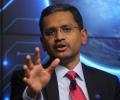
In March this year, when Tata Consultancy Services (TCS) unveiled a new brand statement of "Building on Belief", many wondered if it was the right strategy. When things are uncertain, wouldn't a brand statement such as "Experience Certainty" have been better? But for Rajesh Gopinathan, CEO & MD, TCS, it was all about the way the company was looking at business. As Gopinathan explained over a video call, "Today, we have over 1,000 customers and 98 per cent of our business is repeat business; our relevance to customers should continue, and to increase.
IT major TCS is planning to revamp the organisation structure to align with customers more closely, as it aims to achieve $50 billion (about Rs 3.89 lakh crore) revenue by 2030, a source aware of the development said on Tuesday. The company had garnered $25 billion in revenue in 2021. "TCS has now charted its roadmap and long-term strategy to reach the next $25 billion revenue. "It aims to get to $50 billion by the close of the decade," the source told PTI.

The overall momentum is very strong, said the company CEO.
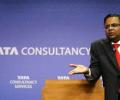
Tata Consultancy Services (TCS) on Thursday reported an 8.4 per cent rise in consolidated net profit to Rs 6,586 crore for the second quarter ended September 30 and said uncertainties in environment had resulted in holdbacks in discretionary spend by customers.

For the entire 2016-17, TCS saw its net profit growing 8.3 per cent to Rs 26,289 crore while revenue was up 8.6 per cent at Rs 117,966 crore

IT major Tata Consultancy Services (TCS) has made changes to its leadership roles in North America. As part of the changes Suresh Muthuswami has been elevated to the role of chairman, North America, said sources in the know. This is one of the most significant leadership changes the company has announced for the region. The reason for the changes in the North American region, the largest in terms of revenue for TCS, is because Surya Kant who has been at the helm of North America for the past 16 years is stepping down by the end of the fiscal year, as he retires.

Indian IT services companies have seen several CEO changes that have, over the past few months, led to some crucial exits at the mid-senior level in a trend that is likely to continue. According to a recent Motilal Oswal report, "Movement of mid-to-senior leadership at IT services firms is a reality, partially on account of multiple CEO-level changes.

The company, however, posted a marginal increase of 1 per cent in its consolidated revenue at Rs 29,584 crore

They don't just want better returns -- they're looking for global opportunities, more variety and smarter ways to grow their money, says Soubho Moulik, CEO, Appreciate.

The second-quarter performance of the top five information-technology services firms gives the hint that slow growth has bottomed out on the back of discretionary spending kicking in for the sector's largest vertical - the banking and financial services. However, concern about the macro-environment continues to be a challenge. Among the top four - Tata Consultancy Services (TCS), Infosys, HCLTech, and Wipro - it is Bengaluru-based Infosys that has performed the best and that was evident in its full-year revenue guidance.

The revenue also rose 14.2 per cent to Rs 29,305 crore (Rs 293.05 billion).
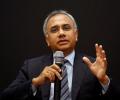
Infosys CEO Salil Parekh has got a massive 88 per cent jump in annual remuneration to Rs 79.75 crore, making him one of the highest-paid executives in the country. The software services firm has sought shareholders' approval for the reappointment of Parekh as chief executive officer and managing director for a second five-year term beginning July 1. According to the company's annual report released on Thursday, Parekh, 58, took home a salary of Rs 71.02 crore in the fiscal year ended March 31, 2022.

Largest industry gift to CMU and largest gift from outside US will support new facility and student scholarships

Wipro on Wednesday reported a 25.9 per cent year-on-year rise in consolidated net profit for the March quarter to Rs 3,569.6 crore, but warned of a weak quarter ahead with up to 3.5 per cent expected drop in IT services revenue for Q1FY26, amid global uncertainties. CEO and Managing Director Srini Pallia said clients remain cautious in the face of macroeconomic uncertainty.

The company's revenue rose 16.08 per cent to Rs 25,668 crore.

TCS reported a 5.8 per cent rise in revenue at Rs 27,165 crore.

On Friday, the stock was the worst hit among the 30 blue-chips on the Sensex

Infosys chairman Nandan Nilekani voluntarily chose not to receive any remuneration for his services.
In July-Sept 2016-2017, TCS had missed street expectations with 7.8% growth in revenue.

The first quarter results (Q1FY25) of Indian IT services hint towards better fiscal growth than the preceding year, but as the management commentary said, "there is still some time for the industry to be firing on all cylinders." Among the majors-Tata Consultancy Services (TCS), Infosys, HCLTech, and Wipro-it is the Bengaluru-based Infosys that has performed better, which was also evident in its full-year revenue guidance.

Any changes in the visa regime may result in higher operational costs and shortage of skilled workers for the $110 billion Indian outsourcing industry.

The Mumbai-headquartered company, however, said it would selectively hire experienced employees from outside.
Tata Consultancy Services (TCS) has weathered the pandemic very well, and has earned tremendous goodwill from customers, which enhanced the firm's standing in the market, N Chandrasekaran, chairman, said in his virtual address of the 26th Annual General Meeting on Thursday. He said TCS shareholders received over 3,000 per cent return on their investments since the company was listed in 2004.

'Skilled labour is different from immigration.' 'While any adverse immigration ruling will impact Indians, it may not necessarily affect the IT services industry.'
The country's largest software services exporter TCS on Monday reported an annualised 8.4 per cent growth in net income at Rs 10,431 crore for the September quarter. The Tata Group company said its total revenue from services grew at a much faster pace of 18 per cent to touch Rs 54,309 crore in the period under review. The city-headquartered IT major had reported consolidated revenue of Rs 46,867 crore in the year-ago quarter from which it had earned Rs 9,624 crore net income.
Tata Consultancy Services (TCS) has been ranked the third most-valued IT services brand globally, after Accenture and IBM, according to a report by Brand Finance. Four Indian IT services companies -- TCS, Infosys, HCL and Wipro -- secured spots in the top-10 global tally.

'When the bombing happened in the Taj Mahal hotel in 2008, that was a very sad moment, but he really took care of the people, took care of everybody and that was when you saw some of his best moments.' 'There are some things which we will never forget. That is when the best of a person comes out.'

The country's largest software exporter Tata Consultancy Services on Monday reported a stellar 72.7 per cent growth in net profit at Rs 6,413 crore for the fourth quarter of last fiscal ended March 31.
Infosys has emerged as the fastest growing IT services brand following 52 per cent brand value growth since last year and 80 per cent since 2020 to $12.8 billion, earning it third spot, the brand valuation consultancy said in its latest Global 500 IT Services Ranking report. TCS and Infosys have pushed IBM to fourth spot from second. IBM's brand value now stands at $10.6 billion, a decline of 34 per cent from last year and 50 per cent since 2020.

This was among the few times that TCS had to deploy rapid application development mode, which means changes in the application happen on-the-go.
The company is also looking at creating an algorithm-based talent marketplace and an internal gig workers' community. Talent Cloud will be powered by Algo Talent Development, enabling associates to move across different technologies and industry domains.
